·Packaging & SEO
YouTube Thumbnail Design: Principles That Drive Clicks
Learn the core principles of high-converting YouTube thumbnail design. Master contrast, typography, and color psychology…

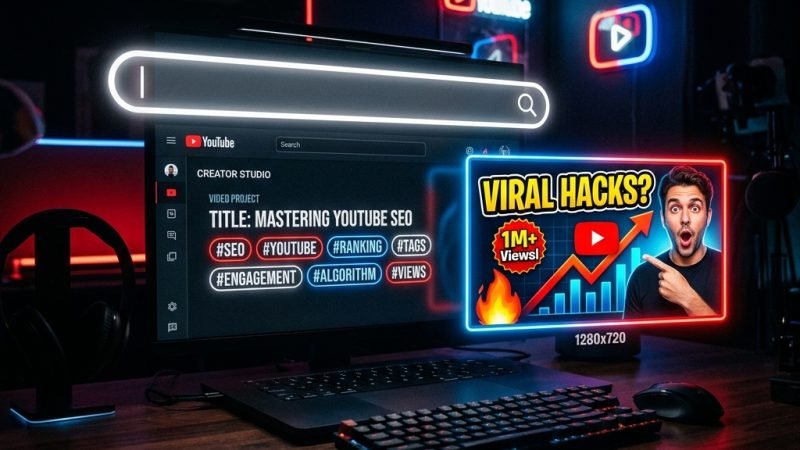
YouTube is the second largest search engine in the world. Unlike traditional text-based search engines, YouTube’s algorithm relies heavily on user behavior alongside metadata. While traditional SEO focuses primarily on content relevance and backlinks, YouTube SEO is a balancing act between providing the right metadata (titles, tags, descriptions) to get your video indexed and delivering an engaging experience that generates strong watch signals.
Effective YouTube SEO starts long before you press record. Keyword research dictates the specific terms your audience is searching for.
The simplest and often most effective method is using YouTube’s own search bar. Type in a seed keyword and observe the autocomplete suggestions. These are real, high-volume searches performed by actual users.
Look at videos ranking well for your target topics. Analyze their titles and use tools to uncover their video tags. This provides insight into the language and phrasing that the algorithm already associates with success in your niche.
Your video’s metadata tells YouTube exactly what your content is about.
Your title needs to serve two masters: the algorithm and the viewer. It should include your primary keyword, ideally near the beginning, but it must also be compelling enough to click. Avoid clickbait that you cannot deliver on, as this will destroy your retention. For more on this, check out our guide on crafting YouTube titles.
The first 200 characters of your description are crucial, as they appear in search results. Include your primary and secondary keywords naturally. Expand on the video’s topic in the rest of the description, providing context and additional value. This is also the place to link to your Atifinity SEO services or other relevant resources.
While YouTube has stated tags play a minimal role compared to titles and descriptions, they are still useful for correcting common misspellings or providing broad context. Don’t overstuff; use a mix of broad and specific tags relevant to your video.
SEO isn’t just about a single video; it’s about overall channel performance.
Metadata gets you ranked initially; watch signals keep you there.
If YouTube shows your video in search results but no one clicks, your ranking will plummet. A high CTR tells the algorithm your video is relevant to the search query. This underscores the importance of a strong thumbnail. Read more in our thumbnail design article.
How much of your video are people watching? High audience retention signals quality. Even more critical is session time—how long a viewer stays on YouTube after watching your video. Videos that start long viewing sessions are heavily favored.
A channel with a history of producing high-quality, engaging content in a specific niche will find it easier to rank new videos. Consistency in topic and upload schedule builds this authority over time.
Don’t fall for outdated advice. Stuffing tags won’t help you, and buying views or subscribers will actively harm your channel by destroying your algorithmic metrics. Focus on genuine optimization and content quality.
If you are struggling to rank your videos, understanding your metrics is the next step. Dive into our guide on understanding YouTube analytics to track your SEO progress.
We design thumbnails and write titles that earn clicks — then optimize every video for YouTube search.
Learn the core principles of high-converting YouTube thumbnail design. Master contrast, typography, and color psychology…
Master the art of writing compelling YouTube titles. Discover proven formulas, understand viewer psychology, and…